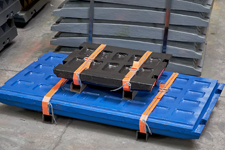
What Is Heat Treatment in Steel Castings
Heat treatment is a controlled process of heating and cooling steel castings to change their internal microstructure.
It directly determines whether a casting is wear-resistant, tough, or brittle.
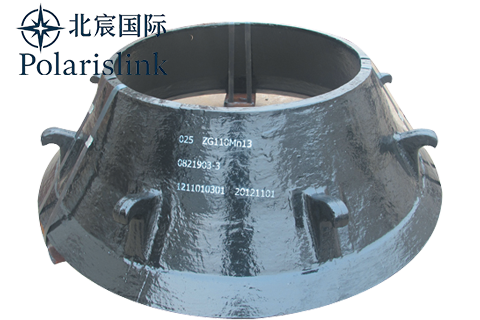
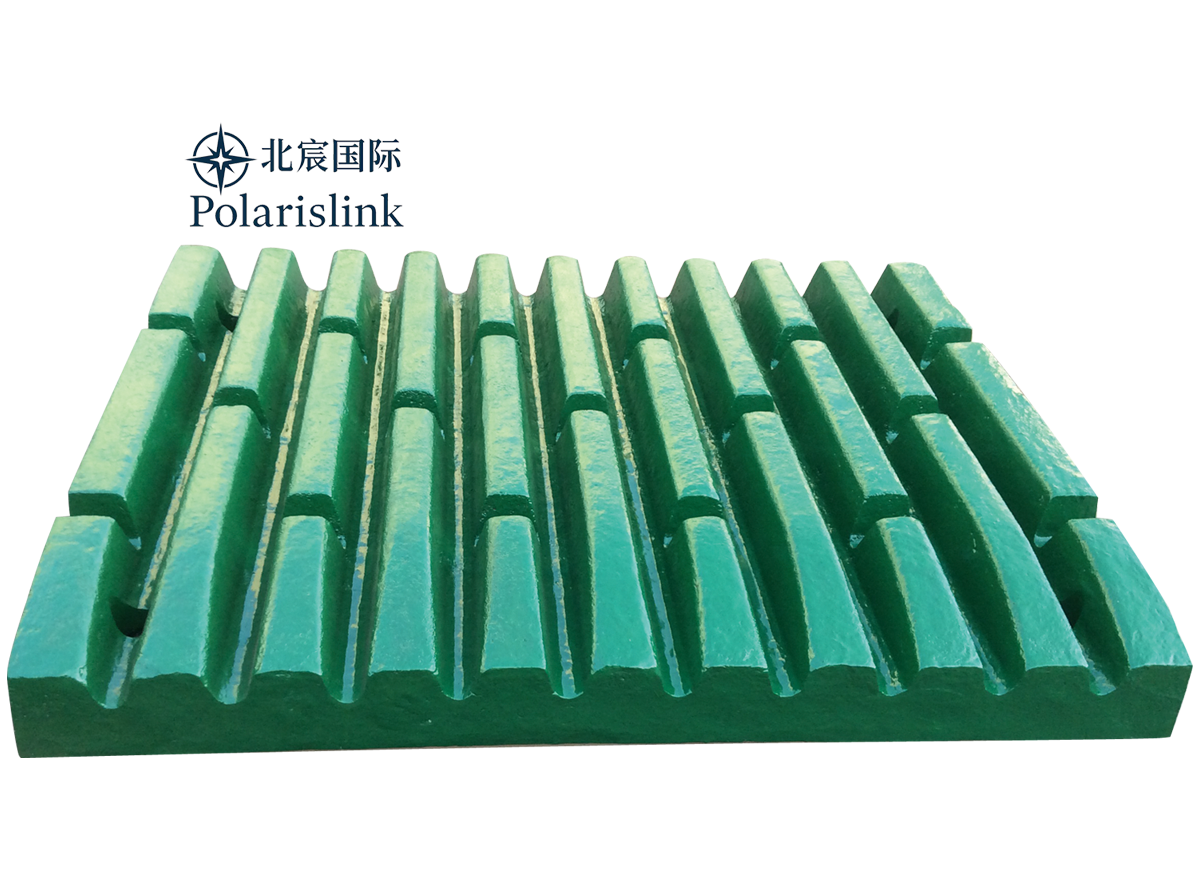
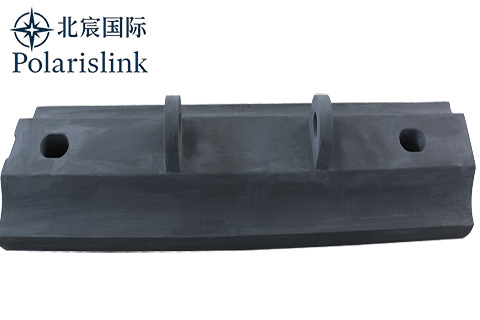
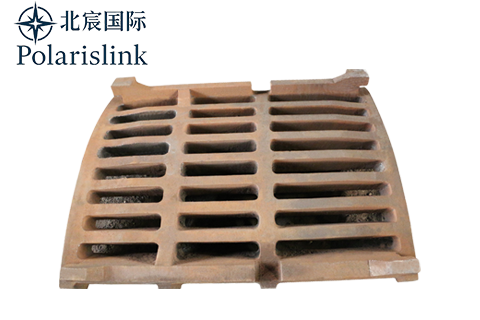
For mining wear parts like jaw plates, mantle, concave, and hammer heads, heat treatment is not optional — it is the core of performance.
At TangShan Polarislink Advanced Materials Technology Co.,Ltd., every casting is processed under strict heat treatment control to ensure stable performance in high-abrasion environments.
www.polarislink.net

Why Heat Treatment Matters
Without proper heat treatment, even good raw materials will fail.
Too hard → easy to crack
Too soft → wears out quickly
Unstable structure → uneven wear, short service life
The real goal is balance: hardness + toughness.
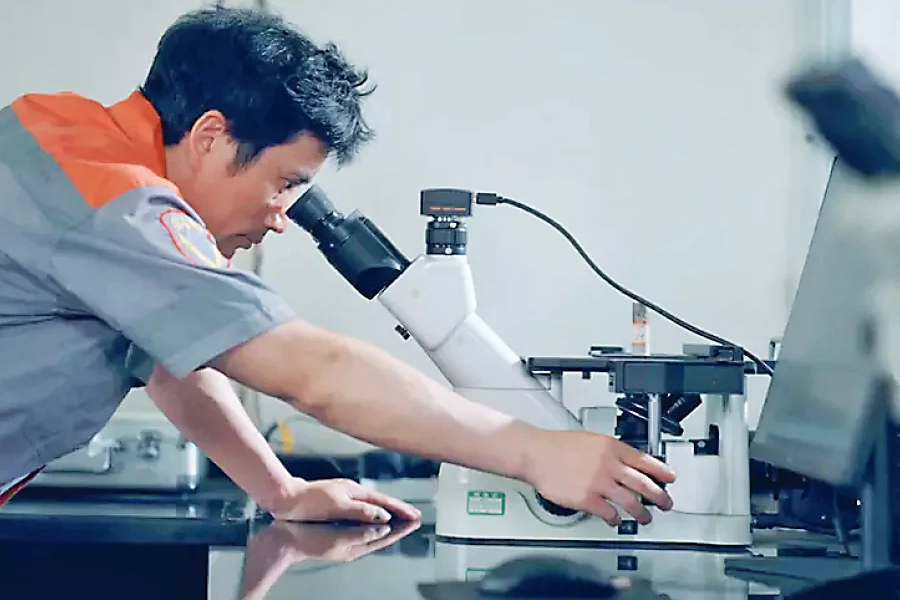
This is why metallography testing is critical. It checks grain structure and carbide distribution to confirm whether the internal structure is correct.
Key Heat Treatment Processes
Annealing
Annealing is used to reduce hardness and improve machinability.
The casting is heated to a specific temperature and cooled slowly.
This process relieves internal stress and makes the structure more uniform.
Normalizing
Normalizing refines grain size and improves mechanical properties.
Compared to annealing, cooling is faster, usually in air.
It produces better strength and toughness, making it suitable before further heat treatment.
Quenching
Quenching is the most critical step.
The casting is heated to a high temperature and then cooled rapidly in water or oil.
This creates high hardness but also introduces internal stress.
For high manganese steel (Mn13Cr2, Mn18Cr2), proper quenching ensures full austenitic structure, which is essential for work hardening.
Tempering
Tempering is performed after quenching.
It reduces internal stress and improves toughness while maintaining hardness.
Without tempering, quenched parts are too brittle and may crack during use.
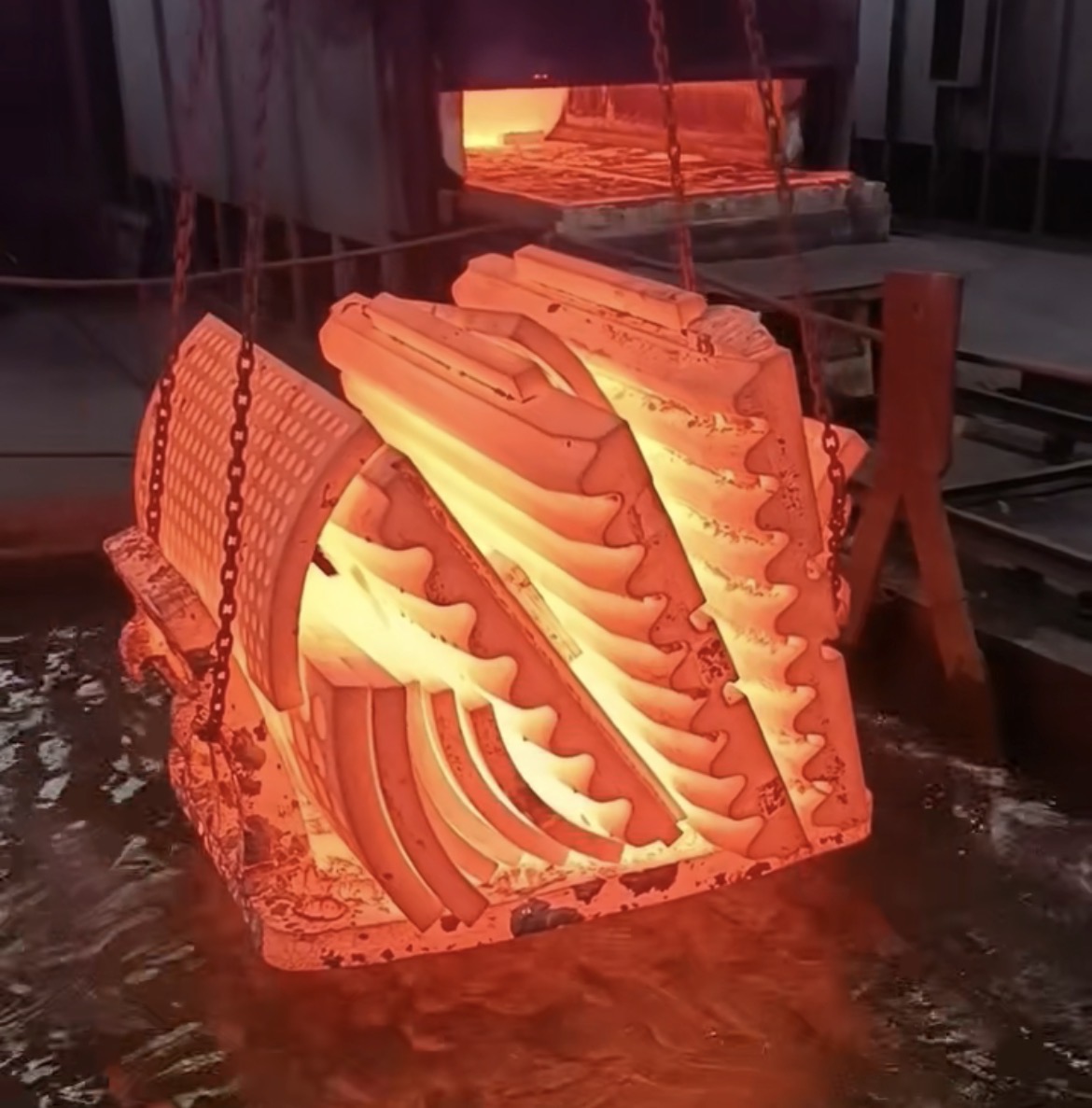
Key Control Points in Heat Treatment
Temperature control is strict. For steel casting, heating temperature must match the material grade.
Cooling rate must be precise. Too fast or too slow will lead to defects.
For example, improper cooling can cause cracks, deformation, or uneven hardness.
At Polarislink, heat treatment is combined with:
Chemical composition testing (spectrometer)
Hardness testing
Metallographic analysis
These steps ensure every batch meets performance requirements.
Real Application in Mining Wear Parts
In high-abrasion conditions like granite or iron ore crushing, wear parts must survive heavy impact and friction.
Proper heat treatment allows:
Jaw plates to maintain hardness while resisting breakage
Mantle and concave to achieve longer service life
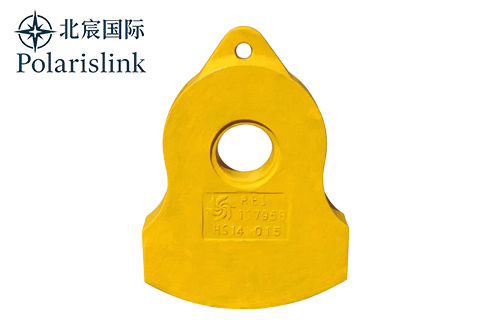
Hammer heads to resist both impact and wear
This is not just theory — it directly affects customer cost and production stability.
Conclusion
Heat treatment is not a simple process. It is the core technology behind high-quality steel castings.
From annealing to quenching and tempering, every step must be controlled precisely.
TangShan Polarislink Advanced Materials Technology Co.,Ltd. focuses on real process control, not just material claims, to deliver reliable mining wear parts.
www.polarislink.net