Enhanced Wear Resistance of Forged Materials in Crusher Wear Parts
Crusher wear parts are subjected to extreme conditions involving high-impact forces, abrasive materials, and corrosive environments. The choice of material significantly influences the durability and performance of these components. Forged materials, known for their superior mechanical properties, have emerged as a preferred choice for manufacturing crusher wear parts. This article delves into the wear resistance characteristics of forged materials, highlighting their advantages in various crushing applications.
Microstructural Optimization Through Forging
Forging is a manufacturing process that involves shaping metal through localized compressive forces. Unlike casting, which involves melting and pouring metal into molds, forging eliminates internal defects such as porosity and shrinkage cavities. This results in a denser microstructure with fewer voids, enhancing the material's overall strength and wear resistance.
During forging, the metal undergoes plastic deformation, which refines the grain structure and aligns the grains along the direction of deformation. This process, known as grain refinement, increases the material's hardness and toughness, making it more resistant to wear and tear. The optimized microstructure also improves the material's resistance to crack propagation, reducing the likelihood of catastrophic failure under high-stress conditions.
Impact of Forging Temperature on Wear Resistance
The temperature at which forging is performed plays a crucial role in determining the wear resistance of the final product. Forging at elevated temperatures, typically between 700°C and 1300°C, allows the metal to deform more easily, facilitating the refinement of the grain structure. However, excessive heat can lead to grain growth, which may reduce the material's hardness and wear resistance.
To mitigate this, controlled cooling rates are employed after forging to prevent rapid grain growth. Additionally, post-forging heat treatments such as quenching and tempering can be used to further enhance the material's hardness and toughness. These treatments involve heating the forged part to a specific temperature, followed by rapid cooling (quenching) and then reheating to a lower temperature (tempering) to relieve internal stresses and improve ductility.
Superior Mechanical Properties of Forged Alloys
Forged materials, particularly high-alloy steels, exhibit superior mechanical properties compared to their cast counterparts. These alloys are designed to withstand the demanding conditions of crushing operations, offering a balance of hardness, toughness, and wear resistance.
High-Chromium Alloys for Enhanced Abrasion Resistance
High-chromium alloys are widely used in the manufacturing of crusher wear parts due to their exceptional abrasion resistance. These alloys contain a significant amount of chromium, which forms hard carbides within the matrix, providing a protective layer against wear. The presence of chromium also enhances the material's corrosion resistance, making it suitable for applications involving corrosive materials.
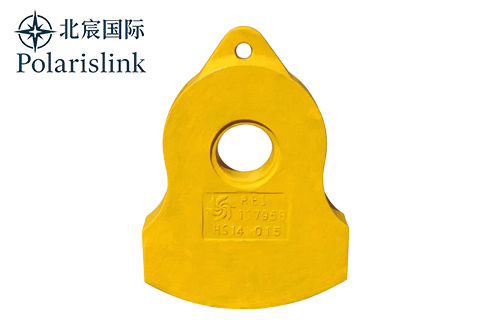
When forged, high-chromium alloys benefit from the grain refinement process, which further increases their hardness and wear resistance. The forged high-chromium parts can withstand the abrasive action of crushed materials, maintaining their shape and dimensions over extended periods. This makes them ideal for use in high-wear areas such as the impact plates and hammer heads of crushers.
Dual-Phase Alloys for Improved Toughness and Wear Resistance
Dual-phase alloys, which combine two distinct phases with different properties, offer a unique combination of toughness and wear resistance. These alloys typically consist of a hard, wear-resistant phase embedded in a tough, ductile matrix. The hard phase provides resistance to abrasion, while the ductile matrix absorbs impact energy, preventing crack propagation.
Forging dual-phase alloys enhances their mechanical properties by aligning the phases along the direction of deformation. This results in improved toughness and wear resistance, as the material can better withstand the combined effects of impact and abrasion. Dual-phase forged parts are particularly suitable for applications involving large, hard materials that exert high impact forces on the crusher wear parts.
Application-Specific Advantages of Forged Wear Parts
The wear resistance of forged materials makes them highly suitable for a wide range of crushing applications. From mining and quarrying to cement production and recycling, forged crusher wear parts offer several advantages over their cast counterparts.
Mining and Quarrying Operations
In mining and quarrying operations, crushers are subjected to extreme conditions involving large, hard rocks and abrasive ores. Forged wear parts, with their superior hardness and toughness, can withstand the high-impact forces and abrasive action of these materials, ensuring reliable performance and extended service life. The optimized microstructure of forged parts also reduces the likelihood of premature failure, minimizing downtime and maintenance costs.
Cement Production
Cement production involves crushing and grinding raw materials such as limestone, clay, and shale. These materials can be highly abrasive, causing significant wear on crusher components. Forged wear parts, with their enhanced abrasion resistance, are well-suited for this application. The ability to withstand the abrasive action of cement raw materials ensures consistent performance and reduces the need for frequent replacements, improving overall production efficiency.
Recycling Applications
Recycling operations often involve processing a wide range of materials, including metals, plastics, and concrete. These materials can vary significantly in terms of hardness and abrasiveness, posing a challenge for crusher wear parts. Forged materials, with their balanced combination of hardness and toughness, can adapt to these varying conditions, providing reliable performance across different recycling applications. The durability of forged wear parts also reduces the environmental impact of recycling operations by minimizing waste generation and resource consumption.