Jaw Crusher Wear Parts Built for Hard Rock: What Operators Need to Know
Crushing granite, basalt, quartzite, or gneiss is a completely different game from processing limestone or sandstone. The rock is harder, more abrasive, and it fights back every second the jaws are closed. Standard wear parts that handle soft aggregate just fine will get chewed through in weeks when you throw hard rock at them.
The difference between a wear part that lasts and one that dies early comes down to three things: the metallurgy, how it is installed, and how the machine is run. Get any one of those wrong and you are burning through inventory.
What Actually Happens When Hard Rock Meets Your Jaw Plates
Most operators think wear is wear. It is not. There is a massive difference between abrasive wear, impact wear, and gouging — and hard rock triggers all three at once.
Abrasive Wear Is the Silent Killer
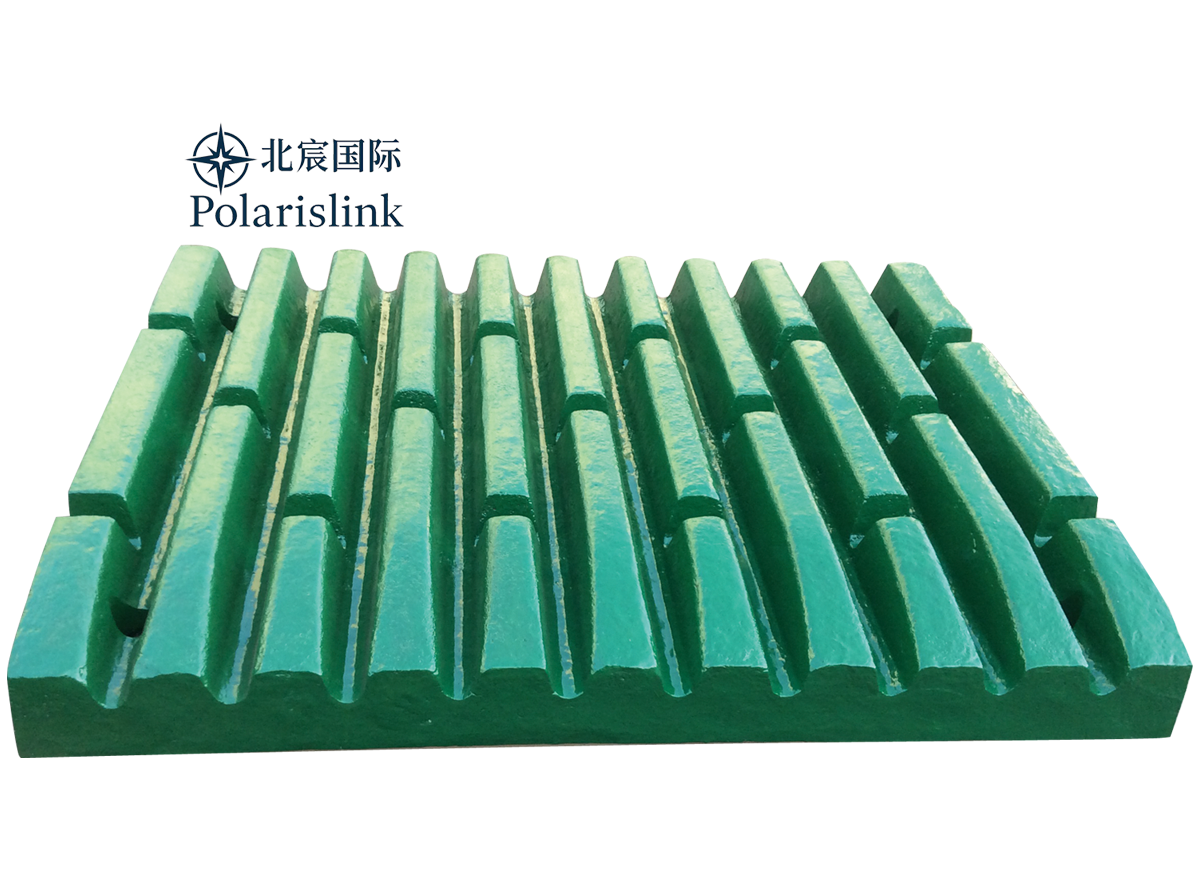
When you crush quartzite or granite, the silica content acts like sandpaper against your manganese steel. Every closing stroke grinds a thin layer off the jaw die surface. Over thousands of cycles, that adds up to centimeters of material loss. The tooth profile thins, the plate gets lighter, and suddenly your product size drifts because the cavity geometry has changed.
This is why operators running hard rock see their jaw plates lose weight fast even when there are no visible cracks. The material is not breaking — it is being sanded away.
Impact and Gouging Destroy Different Zones
The top of the jaw die takes the biggest impact loads. Feed material drops in and slams into the upper teeth with full force. That is where you see chipping, cracking, and broken teeth first. The bottom of the die, meanwhile, takes constant abrasive grinding as material works its way down the cavity. These two zones fail in completely different ways, which means a single material grade rarely handles both optimally.
Manganese Grades and Alloy Options That Hold Up Against Hard Rock
Not all manganese steel is the same. The grade you choose for hard rock is not the grade you would use for recycled concrete. Getting this wrong is the most expensive mistake you can make.
High-Manganese Steel for Impact-Heavy Applications
Mn13 (13% manganese) is the workhorse grade. It work-hardens under impact, meaning the surface gets harder the more it is hit. For hard rock with high impact — think blasting run-of-mine granite — Mn13 handles the shock loads well. But it is soft when it first goes in, so the break-in period is brutal. You will lose material fast during the first few hours of operation.
Mn18 (18% manganese) steps up the hardness right from the start. It does not work-harden as dramatically as Mn13, but it resists abrasion better from day one. For quartzite and high-silica ores, Mn18Cr2 is the sweet spot. The chromium addition adds carbide formation, which gives the surface real bite against abrasive rock.
Chrome Alloy and Composite Liners for Extreme Abrasion
When manganese steel is not enough, high-chrome white iron takes over. These alloys contain 20–30% chromium and form hard carbide networks throughout the microstructure. They are extremely resistant to abrasive wear but brittle under impact. That makes them perfect for cheek plates, side liners, and feed chutes — areas where abrasion dominates and impact is low.
Ceramic-titanium composite liners have also gained ground in hard rock applications. A steel backing with ceramic tiles bonded to the surface gives you the toughness of metal with the abrasion resistance of ceramic. The downside is cost and installation complexity, but for the hardest ores, the wear life improvement can be significant.
How You Run the Machine Matters as Much as What You Put In It
You can install the best wear parts in the world and still destroy them in a week if the machine is not set up correctly. Hard rock does not forgive bad habits.
Feed Size and CSS Are Non-Negotiable
Oversized feed is the fastest way to crack jaw plates on hard rock. When a boulder that is too large enters the cavity, the jaw dies cannot crush it — they just slam together with enormous force. The result is chipped teeth, cracked plates, and damaged toggle seats.
Keep the maximum feed size at 80% of the feed opening. For hard rock, err on the side of smaller. The closed side setting should be set according to the manufacturer's minimum recommendation. Running tighter than spec does not give you finer product with hard rock — it just loads the wear parts beyond their capacity and accelerates every wear mechanism at once.
Nip Angle and Cavity Filling Change Everything
The nip angle determines how the material grips between the jaws. Too wide an angle and the feed gets pushed upward instead of being crushed, grinding the top of the jaw die from the inside out. For hard rock, a steeper cavity design with a tighter nip angle reduces this upward grinding and keeps the wear concentrated where the jaw plates are thickest.
Cavity filling matters too. Hard rock needs to be fed evenly across the full width of the jaw. If material only hits one side, that side wears three times faster than the other. Use a properly designed feed distributor to center the load and protect both jaw dies equally.
Spotting Early Wear Before It Becomes a Problem
Hard rock wear does not always announce itself with a loud crack. Often the first sign is subtle, and by the time you notice it, the damage is already done.
Check jaw plate weight at every change. If a plate is lighter than it should be, the abrasion is eating it from the inside. Look at the tooth profile — if the tips are rounded off but the root is still thick, your feed is too fine and wear is concentrating at the bottom. If the top teeth are chipped but the bottom looks fine, your feed is too large or the nip angle is off.
Toggle seats and pitman bearings take hidden damage every time an uncrushable object slips through. Inspect these during every jaw plate change, not just when something breaks. A worn toggle seat will shift the swing jaw and create uneven contact that destroys jaw plates from the inside out.
Side plates on hard rock machines often get ignored until the frame starts showing wear. Replace them when thickness drops below spec. A worn side plate lets rock contact the frame directly, and repairing a damaged frame costs far more than a set of liners.
The Real Cost of Getting Wear Parts Wrong
Every hour a jaw crusher sits idle with worn or broken parts is money gone. For hard rock operations, that downtime hits harder because the machines tend to be larger and the wear rates are higher. The operators who get the most life from their wear parts do not rely on luck. They match the right metallurgy to the rock type, set the machine within design parameters, feed it correctly, and inspect before failure.
That discipline is what separates a wear part that lasts from one that becomes an expense report.